Bold-Career-Logo-200px
⌘K
About
Blog Testimonials FAQs
Schedule a Call
oOur Services
Job Search Program
Career Coaching
Interview Coaching
Live Job Opportunity Support
cCorporate Outplacement Services
aAbout
rResources
Career Positioning Audit
nNewsletter
iInterview Coaching | How an Interview Coach Can Help You
cCareer Coaching | Everything You Need to Know
Blog
Testimonials
fFAQs
Schedule a Call
Back to products

Interview Coaching Sprint

45 days of preparation and support across your interviews, from first round to offer. For senior managers, directors and executives in an active interview process.
Senior interviews are rarely one conversation. There's a recruiter screen, a hiring manager, a panel, perhaps a presentation or a case, and a final conversation where the real question is whether they can picture you in the role. Each stage tests something different, and most candidates prepare for all of them the same way.

The Interview Sprint gives you 45 days of focused preparation and support. We start by building your case: why you, for this role, in plain language. Then we prepare each stage as it comes, practise the conversations that matter most, and review what you plan to say before you say it.

We know how shortlists get built, because we used to build them. Ian Christie, our founder, interviewed more than 1,000 senior candidates as an executive recruiter, and our method is built on what he saw from the employer's side.

How it works

  • Before we start: a short intake, the job posting, your résumé and anything you know about the process

  • Kickoff and Diagnosis (90 minutes): the role, the decision-makers, your case for why you, and where your interviewing is strong or exposed

  • Your Sprint Brief, within 48 hours: your case, your key stories and the plan for each stage, on one page

  • Three working sessions (60 minutes each): timed to your process. Use them for mock interviews, presentation rehearsal or debriefs between rounds

  • Up to four reviews: written or video feedback on your answers, stories, presentation or follow-up notes

  • Two Quick Calls (15 minutes): for the night before a panel, or the call that just came in

  • Your Sprint Wrap, at the end: where things stand and what we'd recommend next

What we can focus on

  • Decoding the role: what they're really hiring for, and who decides

  • Your case: the three or four reasons you're the right person

  • Your stories: the examples that prove it, shaped for this role

  • Practice: mock interviews with direct feedback

  • Panels, presentations and case exercises

  • Working with search firms and internal recruiters

  • Offers: reviewing, weighing and responding to one

Materials we can review: interview answers · story bank · presentation or 90-day plan · tailored résumé · follow-up and thank-you notes · offer details

Also included: the Interview Toolkit [story bank template with worked examples, interview question bank, negotiation and offer-evaluation guide] · 90 days of access to our career platform · one year of CoCareer, our search management tool

A good fit if you're a senior manager, director or executive in an active process, or expect to be within the next few weeks, and you want structured preparation for every stage rather than cramming for each one as it arrives. Interviewing for an internal promotion where the decision involves more than the interview? See the Promotion Sprint.

Here is what we control and what we don't. We can't decide who the panel chooses or how long their process takes. We can make sure you're the clearest, best-prepared version of your candidacy at every stage.

Details: 45 days from your kickoff session. One extension of up to two weeks is available on request. All sessions one to one, by video. Confidential. Questions between sessions are handled in your next session or a Quick Call. Process running long? Add an extra session within your Sprint, or continue with monthly coaching when it ends.

Credit: Already had an Interview Strategy Session or Roadmap with us? You pay the difference. If you continue into the Next-Level Role Program within 30 days of your Sprint ending, half your Sprint fee counts toward it.

Only one interview to prepare for? An Interview Strategy Session may be all you need, and it counts in full toward a Sprint if the process continues.

Content

3 ~ Selling
Why You for this Role?
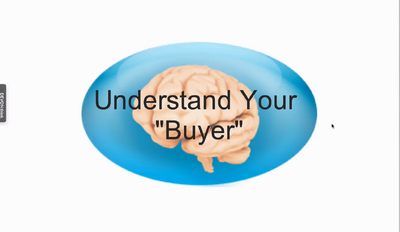
roMhJKDTWaA6az5FT7RQ_M3_e_Understand_Your_Buyer_Mindmap_Video.mp4 13:43
Get in the Head of Your Buyer
This is an important lesson. Using a “mindmapping” technique, I walk you through the various considerations that might be present in the mind of the hiring decision maker(s). Commit to understanding this lesson and you’ll be a long way towards becoming a formidable candidate. This lesson impacts not only your interviewing performance but also your cover letters and resume. 
wma1zcwaQNa8iuDydhkV_M6_a_Introduction_Video_-_Why_You.mp4 1:32
Introduction to the Concept of "Why you"
In this lesson, I lay-out the strategy for speaking to the needs and requirements of the hiring organization. Learn how to connect the dots between you and your target role.  Resources Candidate Solution WS 1
C9Og09FhRrqcIFuQLLrK_M6_a_Why_You_Strategy.m4v 9:32
The Why You Strategy
In this lesson, we dig into the details of developing a strong argument for why you. This is essential and powerful work and sets up the next sections in the workbook. 
KDEqLaJTQ5mafEtYI9fK_M6_b_Answering_the_Why_You_Question.m4v 12:26
Answering the Why You Question
Next, we dig-in to specific approaches to articulate your value proposition for your target role.
photo-1531280518436-9f2cc0fff88a
Workbook Step 4: What do I know about my Target
It’s now time to go back to the Interview Strategy Workbook to start developing your strategy. In Step 4, you do the high value work of better understanding your buyer - the people and organization doing the hiring. Getting a better understanding of your target allows you to create a winning why you value proposition.  To aid in Step 4, I’ve provided you with two mind maps pdf’s. These are high value tools. You can use them to help you connect the dots between your offering and a specific opportunity. Beyond this exercise, these mind maps are valuable tools to: Develop an approach strategy for the opportunity Customize your resume Understand what you need to do for a cover letter Help you prepare for interviews And help you understand your value as you begin a new role. Resource - Opportunity Analysis MindMap The first mind map is designed for a specific opportunity.  There’s a job that’s been defined. You may or may not have a job description. You are able to identify:  The organization and industry The team Something about the job …And from all of this, glean more information to help define the opportunity.  Resource - General Market Analysis MindMap The second mind map is designed for your general target market. If you are working on this interviewing program in order to be better prepared for future interviews, this map will be a good starting point for you.  Action Steps Download either (or both of) Opportunity Analysis (situation 1) | General Market Analysis (situation 2) You can print and write on the mind map (if possible, try and print on a larger size paper than 8.5×11). Or you can use the map as reference to create your own notes. You read a mind map clockwise, starting with the top right branch and working clockwise through the sections The task is not to stress about filling out everything. You won’t know everything. Or some branches won’t apply. Rather, you are trying to better develop your understanding. The map can function as a reminder for clues and threads of information and ideas that will help you be a better informed and stronger candidate. You can also use it as a reference as you work on Step 4 in the Interview Strategy workbook. Once you have made some notes and feel ready… Open the workbook and go to Step 4: What do I know about my Target. Write down your best ideas using the rows in the table as prompters. The better your insights here, the easier it will be to develop your strategy.  Tip: Go beyond the explicit requirements. What happens in this job? What will the pressure be? How will success be measured? What do I think are the key competencies needed? 
2
photo-1531280518436-9f2cc0fff88a
Workbook Step 5: Why You
With the analysis of your target market or specific job target done In Step 4, it’s now time to put it all together.  You know more about your buyer and their requirements of competency, expertise, experience and culture fit.  You’ve done the important work of inventorying your professional experience You’ve developed insights about your experience You’ve inventoried your key, relevant accomplishments And you’ve learned how to answer the key types of interview questions. As well as how to develop true stories to prove your candidacy.  Time to put it together! Action Steps Open the workbook and go to Step 5: Why You?.  Start, by brainstorming and capturing your professional strengths relative to your target job (or market). Tip: All of that work we’ve done should allow you to be more creative and insightful here.  Next, based on your understanding of the role, your experience inventory from Step 3 in the workbook and your strengths, what are your key stories / work examples that will best illustrate your fitness for this role. Write them down (and commit to fully scripting / developing your stories).  Next, capture your best why you reasons. I’ve provided an example and you should refer back to the lessons for more on this if you’re stuck. These will take some polishing and refinement. So devote more than one sitting.  Finally, it’s worth thinking about why not you so that you don’t get blindsided. What are your gaps? 
photo-1531280518436-9f2cc0fff88a
Worksheet: Job Opportunity Analysis
Purpose This mindMap tool will help you connect the dots between your offering and a specific opportunity. This could be a promotion opportunity, a specific new job opportunity, a career change conversation or a deal in which you and your services are a key part of the offering. The Mindmap can help you: Develop an approach strategy for the opportunity Customize your resume and/or LinkedIn profile Understand what you need to do for a cover letter and/or an approach email Help you prepare for interviews And help you understand your value as you begin a new role.
3.1 Mastering Interviews
Introduction to Typical Hiring Processes 23:39
Introduction to Typical Hiring Processes
A key part of mastering your interviewing performance is understanding the ins and outs of typical hiring processes.  Interview Phases
4
IRPbHkw0Q9OqPbTGivOL_M2_c_Success_Strategies.m4v 16:12
Your Interview Success Factors
There’s a lot to absorb and master when it comes to interviewing. In this lesson, I offer 4 key success factors or themes, that will help you be more intentional about your interviewing performance. 
1
5LmGiLITViCp2MWyNo5g_M2_a_Mental_Game.m4v 7:28
Have a Strong Mental Game
Let’s face it. Interviewing can be stressful. Particularly when you don’t know the people conducting the interview. Or you do know them, and don’t feel worthy. In this lesson we deal with the mental game of your interview performance. 
eChNh0nWTFGZcPVuEgnp_M2_b_Market_Power.m4v 1:39
Influence Your Market Power
One of the things lost in so much advice out there is the reality check of fit and value. Are you a strong candidate? Would you hire you for this role? The degree to which you have market power with a given job opportunity has a great bearing on your mental game and on your approach, and frankly, on your success rate. Learn more here. 
Interviewing Success Strategies(3) 16:12
9 Winning Strategies to Adopt
In this lesson, I share with you 9 strategies that if embraced, will dramatically impact the success of your transition efforts. 
tLHcictSWGYu4q3Knr3Q_M5_a_Introduction_to_Mastering_Question_Types.m4v 6:52
Introduction to Interview Question Types
In this module, we go deep into training you on how to handle the major types of interview questions and I give you a briefing on each of the other types of questions.  In this first lesson, I introduce the key success principles to help you master your interview question responses.
Gz7njlNzQGCmnhjpYQ83_M5_b_Traditional_Questions.m4v 8:43
Get a Lock on the Core Interview Questions
Tell me about yourself. What are your weaknesses? These are examples of traditional interview questions. Learn more about how to handle them here.   
pYYNoceReRFhl3q5cooQ_M5_c_Behavioural_Questions_part_1.m4v 48:36
Behavioural Question Workshop
These are the questions that begin with something like: Give me a specific example...that illustrates your critical thinking abilities Tell me about a time when... I've devoted a separate module to the behavioural question because:  It is complex Doing well requires more work on your part It connects with the importance of mining your background as your responses to these questions involve you telling true stories And it hits on the strategy part of your career move interview strategy You will find 3 lessons on behavioural questions and answers.  In parts 1 & 2, I teach you the theory and how to tackle these questions. Part 3 is a workshop where I ask you to pause the video and develop and fine-tune a practice answer. This is very valuable material and an opportunity for you to level up on your skills in this area. 
2
kkq0Px7gTwa7Be1QDrr5_M5_d_Situational_Questions.m4v 4:21
Situational & Hypothetical Questions
Another difficult type of question to handle are the situational or hypothetical questions. What would you do if your manager was unavailable and ….” Good news, there’s an answer framework you can use. 
photo-1531280518436-9f2cc0fff88a
The Salary Question
Rather than provide you with another presentation, I’ve given you some quick notes in slide format on handling the salary question when it comes up in the interviewing process.   
3.1 Additional Resources - Key Questions
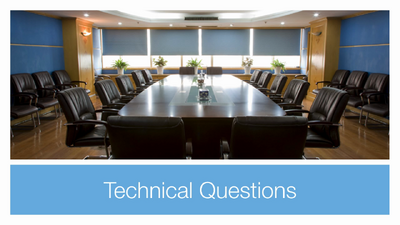
photo-1531280518436-9f2cc0fff88a
Answering - "Why are you interested?"
❓ The Question “Why are you interested in this role/company?” This is not a throwaway. It’s a signal of whether you’re a strategic professional or a desperate job seeker. ⚡ Why This Matters [ ] Show intentionality (not an accidental candidate) [ ] Build emotional connection with the interviewer [ ] Differentiate yourself from other candidates ⚠️ If you can’t give a compelling answer, it may mean this isn’t the right opportunity. 🧩 The 6 Interest Categories (Your Building Blocks) Pick 2–3 of these to shape your response (don’t try to use all six). Opportunity – What excites you about their mission, product, or impact? Career Fit – How does this role move your trajectory forward? Cultural Fit – Do you connect with their values, leadership, or style? Organization – What draws you specifically to THIS company vs. competitors? Value Proposition – How do your strengths align with their priorities? Success Potential – Why do you believe you can thrive here and deliver results? 🔄 Reframe Your Thinking Shift from what you want → what you bring. ❌ “I want to gain more leadership experience.” ✅ “My background leading global teams positions me to accelerate your international expansion.” ❌ “This seems like a good opportunity.” ✅ “Your strategy to enter new markets aligns with my track record driving launches in North America.” ❤️ The Evolution of Interest Think of it like dating — interest should grow over time. Early Interviews → “From what I’ve learned so far, I’m intrigued by…” Later Interviews → “After meeting the team and learning more, I’m even more convinced this is the right fit.” ⚠️ If interest doesn’t deepen, consider exiting. Being selective makes you more attractive, not less. 👀 Show, Don’t Just Tell Actions that prove interest: [ ] Ask thoughtful, company-specific questions [ ] Reference recent news, moves, or strategy shifts [ ] Request to meet more team members [ ] Share an insight in your follow-up email [ ] Bring a light “preliminary plan” idea [ ] Mention relevant feedback from your network ✅ Pre-Interview Checklist Use this before every interview: [ ] Research company’s recent moves (press, earnings calls, leadership changes) [ ] Identify their target outcomes + connect to your skills [ ] Write down 2–3 specific reasons you’re interested [ ] Prepare examples of how you’d add value (past wins, transferable skills) [ ] Practice delivery (genuine, confident, not memorized) 🔀 Branch Paths: Adapt Your Answer Early in process: curiosity + initial impressions Mid-process: specific examples + enthusiasm Late-stage finalist: conviction + clear alignment ✍️ Practice Template Fill in the blanks: “I’m drawn to [Company] because of [specific mission, strategy, or cultural element]. This role connects with my trajectory by [career fit reason]. With my experience in [X], I’m positioned to help you achieve [Y outcome].”
photo-1531280518436-9f2cc0fff88a
Answering - "Why should we hire you?
🎯 Playbook: Answering “Why Should We Hire You?” in an Interview ❓ The Question “Why should we hire you?” This isn’t a throwaway. It’s the career-defining question—in interviews, promotions, and negotiations. ⚡ The Brutal Reality Common mistakes candidates make: [ ] Rattling off random accomplishments [ ] Rambling without a clear thread [ ] Talking about what you want [ ] Forgetting to link your answer to their needs [ ] Being overly modest when confidence is required 🚫 Result: You hand the job to someone less qualified. 🔍 The Hidden Truth This question is always present. It runs through: [ ] Your resume [ ] Your LinkedIn profile [ ] Every interview answer [ ] Salary negotiations [ ] Promotions [ ] Your personal brand ✅ Mastering it means you control your career narrative. 🧩 The Strategic Framework Build your “Why You” case by choosing your strongest 4–6 points from this framework: Experience Match → Your directly relevant background with measurable results. Specialized Knowledge → The domain expertise, technical depth, or industry edge you bring. Situational Mastery → Your experience in growth, turnaround, transformation, or startup environments. Leadership Approach → The way you mobilize teams, make decisions, and deliver outcomes. Cultural Fit → Why you’ll thrive in this environment (values, style, leadership culture). Future Potential → The trajectory, adaptability, and long-term value you bring to the organization. 💡 Tip: Don’t list them all. Select the 4–6 most powerful and prepare proof points. 💥 Your Power Move Don’t wait until the very end. Seed your value throughout. Example: “Change management is one of my core strengths. Let me share how I’ve navigated this before…” You’re not just answering questions. You’re building the case for you. 🏁 Your Closing Strategy Even if they don’t ask the question, it’s still hanging in the air. Take initiative: “Before we wrap up, let me summarize why I believe I’m the right fit for this role…” ⚡ Confidence in the final moments wins roles—and careers. 📈 The Career Investment This isn’t just interview prep. It’s career strategy. When you know your “Why You”: [ ] You pursue the right opportunities [ ] You negotiate from strength [ ] You build a reputation that opens doors [ ] You become undeniable ✅ Pre-Interview Checklist [ ] Select 4–6 points from the Strategic Framework [ ] Prepare examples and proof for each point [ ] Seed them naturally throughout the conversation [ ] Rehearse your closing summary statement ✍️ Practice Template Fill this out before each interview: “I believe you should hire me because I bring [specific strength #1] and [specific strength #2], proven by [example/results]. My approach to [leadership/situational factor] aligns with your current challenges. Beyond that, I see an opportunity to deliver [future outcome/impact] here at [Company].”
dOA0MYMQoMc5VIWXtuaQ_M5_e_Technical_Questions.m4v 2:13
Technical Questions
Every job has some type of technical component. This lesson provides some basic guidance on what to do.
photo-1531280518436-9f2cc0fff88a
Making Interview Presentations
A common practice in interviewing for senior roles is to require candidates to make a presentation, with the hiring organization issuing instructions on time limit and subject. While this may seem like a daunting experience, it can actually be good for your candidacy, if you prepare. Presenting puts you in the driver’s seat and allows you to demonstrate sides of you that may not be as evident in a traditional interview situation. The presentation may also precede a business discussion on some of the key issues raised during the presentation. Unlike many interview situations where you don’t know what the format will be, here, you have the advantage of being able to prepare. Here are some tips to make the most of the opportunity: Answer the Question: In most cases, you will be given a specific question to answer or challenge to address and a 10-15 minute time frame in which to do it. My most important advice is to answer the question. It sounds obvious, but you would be surprised at how many slides and minutes most people put into introductions, background information and other relevant, but not critical content. Do not skimp on recommendations and how you intend to solve the problem, or pursue the opportunity. Challenge Yourself: Now that you have a draft, where are you most likely to be challenged? Presentations often require you to make a recommendation on a course of action. A common pitfall is the “how” part. How will your recommendation be implemented? How much will it cost? By when? What does the organization get out of your recommendation? Supplemental Material: Do not go over on time and do stick to the subject they have asked you to address. However, unless specifically forbidden to do so, you might want to add a hand-out or two to supplement your presentation. Process-flow charts, a summary spreadsheet, or a drill-down on a specific topic may help push you over the top. Visual: You can significantly elevate your message with a visual representation of information rather than the same old bulleted slides. Timelines, data breakdowns, or segmentation ideas are often best handled visually, rather than in text. Defend, but don’t Argue: You may get asked some difficult follow-up questions. They may be legitimate clarifying questions about content, or an attempt to see how you handle yourself. You should attempt to defend your recommendations, ideally with objective measures. However, sometimes you will find yourself with the wrong recommendation, the wrong answer, or not in agreement with the people conducting the interview. You have to read the situation and decide when to back off. Do not try to win an argument in an interview. Instead, find a way for both sides to win. “You make an excellent point. My recommendation is an example of an approach we could take. However, we would need to get some hard data first before making a final conclusion.” On Stage: It goes without saying that you are on stage and need to conduct yourself accordingly. Know your presentation and timing. Make eye contact with your audience. Pause between important points. Use presentation slides to support your text, rather than read from the slides. Do your best to speak without cue cards. Find out ahead of time what the audio-visual situation is going to be. Be comfortable enough with your subject so that you can seamlessly handle interruptions, or required changes in direction based on audience feedback. In other words, it really isn’t that different from any professional presentation. Know your content. Back-up your recommendations. And, be prepared.
3.2 Navigate Specific Opportunities & Interview process with Confidence

photo-1531280518436-9f2cc0fff88a
Specific Job Opportunity Preparation (the 20%)
When a real opportunity lands, this is where you focus your energy. Step 4: Research and Position Goal: Decode the opportunity and map your pre-built foundation to their specific needs. [ ] Analyze the job description thoroughly: [ ] Every skill, tool, and qualification listed [ ] The implied competencies and level expectations [ ] What problems this role is being hired to solve [ ] Research the company deeply: [ ] Products, services, customers, and business model [ ] Culture, values, and operating principles [ ] Current events, leadership changes, PR issues, and public-facing news [ ] Industry position, competitors, and business challenges [ ] Map your story arsenal to this specific opportunity: [ ] Select the 7-15 stories most relevant to this role's requirements [ ] Tailor language and emphasis to match their context and terminology [ ] Develop your "Why this company, why this role" narrative [ ] Anticipate role-specific questions (competency-based, situational, strategic) and prepare targeted responses This is the only step that can't be done in advance. But because you've already built your foundation in Steps 1-3, you're not starting from zero. You're adapting, not creating. Step 5: Strategize and Close Goal: Walk in with a game plan and walk out having made your case. [ ] Prepare 10-15 high-quality questions to ask: [ ] Questions to get information you need to evaluate the opportunity [ ] Questions that showcase your knowledge of their business and challenges [ ] Questions designed to create genuine, strategic conversation [ ] Never ask questions with answers easily found on their website [ ] Prepare for the interview format: [ ] Panel interviews: know the audience and tailor accordingly [ ] Presentations: know your content, make eye contact, handle interruptions [ ] Case or assignment-based interviews: demonstrate structured thinking [ ] Assessment tools: understand what's being measured [ ] Run at least one mock interview focused on this specific role [ ] Plan your closing: [ ] Restate your fit and enthusiasm [ ] Ask about next steps and timeline [ ] Leave a strong final impression Think of it like a professional presentation. Know your content. Back up your points. Be prepared to adapt in real time based on your audience. The best interviews feel like strategic conversations, not interrogations. The Bottom Line 🏁 A powerful by-product of this work: Interview preparation done right doesn't just help you in interviews. It creates clarity and confidence in your professional identity and story, and lays the groundwork for better career decisions and moves.
photo-1531280518436-9f2cc0fff88a
How to Ace Your Video Interview
Why This Matters Video interviews are now standard. And most candidates treat them like an afterthought — they show up, hope the tech works, and wing it. That's a mistake. Here's the thing: on video, everything is amplified. Low energy reads as disinterest. A messy background reads as disorganized. A bad camera angle reads as a lack of confidence. And technical problems? They rattle you before the first question even lands. The good news: video interviews are one of the most controllable parts of your job search. With a few deliberate moves, you can show up looking polished, prepared, and completely in command. This lesson gives you a practical, repeatable system for doing exactly that. The 9-Point Video Interview System 1. Bring Your Best Energy Without the dynamics of an in-person meeting, your energy carries more weight than you think. On camera, "normal" energy often reads as flat or disengaged. Do this: Get fresh air or light exercise 15–20 minutes before the call Consider standing during the interview — it naturally lifts your voice and presence Keep water nearby so you stay sharp and have a natural reason to pause Why it works: Interviewers can't shake your hand or feel the room. Your energy is your first impression. 2. Use "Stealth" Post-It Notes This is one of the biggest advantages of a video interview — and almost nobody uses it. Stick post-it notes around your screen or keep a doc open just out of camera view with: A prompt to smile and project warmth 3–4 key strengths or value highlights you want to land The names of your interviewers (personal connection matters — use their names) Short prompts for your best stories (the ones you've prepared using CAR format) Why it works: You'd never have these cues in a boardroom. On video, you can. It's like having a cheat sheet for confidence. 3. Stage Your Space Like a Pro Your background and lighting either add to your presence or subtract from it. There's no neutral. Do this: Choose a clean, uncluttered background — a bookshelf or simple wall works well Position your main light source in front of you, not behind — avoid being backlit or silhouetted Remove anything distracting or overly personal from the frame Pro tip: Do a test call with a friend or record yourself for 30 seconds. You'll immediately see what needs to change. 4. Be the Star of the Frame Don't make yourself small. You've got a lot to bring to this conversation — your framing should reflect that. Do this: Position your camera so your head, shoulders, and upper torso are visible Leave a little headspace above you — not too much, not too little Sit (or stand) up straight. Your posture signals confidence before you say a word Common mistake: Sitting too far back so you look tiny, or too close so you're just a floating head. Aim for "news anchor" framing. 5. Minimize Distractions Peace of mind helps you focus. And nothing throws you off faster than an unexpected interruption. Do this: Close all doors. Silence all devices. Put your phone in another room if you can Let anyone in your household know you're unavailable Close unnecessary browser tabs and apps — notifications are the enemy If you have a pet, plan for it (seriously) Why it works: Every distraction you eliminate is one less thing competing for your focus when you need it most. 6. Mind the Lag Video calls almost always have a slight audio delay. If you respond at normal conversational speed, you'll end up talking over the interviewer. Do this: Pause for a beat (1–2 seconds) before responding to any question This prevents you from cutting anyone off — and it actually makes you look like a more thoughtful listener Bonus: That brief pause also gives your brain a moment to organize your answer. It's a feature, not a bug. 7. Test, Test, Test Technology failures are preventable. Don't let something avoidable put you on the back foot. The day before your interview: ✅ Test your audio (mic + speakers/headphones) ✅ Test your video (camera, lighting, framing) ✅ Test your internet connection (use a wired connection if possible) ✅ Confirm you have the correct software installed (Zoom, Teams, Google Meet, etc.) ✅ Have a backup device charged and ready — phone or tablet with the app installed Why it works: Showing up calm because you know the tech works changes your whole energy in the first 60 seconds. 8. Control the Controllables You have zero control over how the other side has set up their call. Their camera might be bad. Their audio might cut out. They might be distracted. Do this: If they're having technical issues, be patient and gracious — "be like water" You don't know what kind of day they're having. Demonstrate empathy Stay focused on what you can control: your energy, your preparation, your professionalism Why it works: How you handle imperfection on a video call tells the interviewer a lot about how you handle imperfection at work. 9. Don't Get Thrown Reading the "room" is harder on video. You can't pick up on body language the same way. Multiple interviewers make it even trickier. Do this: Don't let blank faces or low energy from the panel throw you off — many people default to neutral on camera Use pauses and clarifying questions to stay in control of the conversation Refer to interviewers by name to hold attention and create personal connection Why it works: Panel interviews on video can feel like performing into a void. Using names and asking questions turns it back into a conversation. Your Pre-Interview Video Checklist Use this 15 minutes before every video interview: [ ] Tech tested (audio, video, internet, software) [ ] Backup device charged and ready [ ] Background clean, lighting positioned in front [ ] Camera framed at head/shoulders/upper torso [ ] Post-it notes placed (energy prompt, key strengths, interviewer names, story prompts) [ ] Distractions eliminated (doors closed, phone silenced, notifications off, household notified) [ ] Water bottle within reach [ ] Quick movement or fresh air taken to boost energy Key Takeaway Small, deliberate tweaks transform how you're perceived on screen. This isn't about being fake or performing — it's about removing the friction that gets between you and showing up as your best self. Polished. Prepared. 100% ready. The candidates who win video interviews aren't the ones who wing it. They're the ones who treated the medium seriously and controlled what they could control.
Va8uZrq4Tny5drB6WLoJ_M7_h_Phone_Manners.m4v 3:45
Phone Manners
There’s a strong chance that you’ll have to take a phone call as part of being a candidate. It might be a scheduled or unscheduled phone interview, a scheduling call or an offer call. Learn the in’s and out’s here. 
photo-1531280518436-9f2cc0fff88a
Improve Your Written Communications
There’s more to the interviewing and hiring process than the actual interviews.  Similar to the risks and opportunities associated with phone communications, a key part of managing your impression through the process revolves around your written communications. Your written communications should be a key component of your professional image. At a minimum, you don’t want this communication channel to damage the impression you otherwise made. And if done right, it can add to the strength of your candidacy.  Types of Written Messages Whether you are exchanging emails or messages, the most likely types of messages you will send are:  Introduction / Expression of Interest Scheduling Follow-ups Offer management Acceptance / declines Each is an opportunity enhance or damage your reputation with the hiring organization.   Traps to Avoid in Your Written Communications Sloppiness: The most obvious trap is making careless errors in your writing. Ttake the same level of care in crafting your messages as you would in your resume. There’s no room for spelling mistakes, typos or major grammatical errors. And replying to an email from your smart phone is not an excuse.  Message Format: Related to above, pay attention to the structure of your message. While emails generally aren’t long, how they appear on the reader’s computer makes an impact.  Salutation: Greet/acknowledge the person by name Use paragraph breaks Close: Sign-off with a thank you or sincerely or whatever is appropriate for the content of the message.  Email signature: It’s a chance to brand yourself, to establish consistency and to conveniently show your contact information Informal Tone: Similarly, avoid the use of a too informal tone. This is a business communication.  Inappropriate Expectations: It’s natural to put expectations into our applications and interview performance. It’s natural to want to know our status. However, the wrong timing and tone can be a real turn-off to the recruiter / hiring manager.  Timing: Hiring processes take time and in most cases, you aren’t the only candidate. The hiring manager has other priorities. Emailing 2 days after you applied to check status is not a good idea. Emailing the day after your interview to check status is also not a good idea. You can follow-up, particularly when you have other opportunities and need to get a sense. If they didn’t tell you how long it take, you might follow-up after a week to politely check status and reiterate your interest. If they did promise you a date, and that date passes, again you could follow-up a day or two after their promised deadline to check. That’s where tone comes in.  Tone: Avoid language that puts the monkey on their back, suggests they are at fault or asks for inappropriate information. I’m following up because you didn’t get back to me like you promised ...will not win you any points. Whether you are right or not is irrelevant. It’s their process. One way to do a follow-up is to acknowledge that you appreciate they have a process to go through and wanted to respectfully get an update on the where they are in the process.   Recipients: There may be more than one person involved in the hiring process. You can send a thank you to the various people who interviewed you. What you don’t do is an end-run on their process. Establish who is your main point-of-contact and communicate with them. The other danger around recipients is to forget to include someone in a communication who should have been included. Again, when in doubt, ask who you should communicate with. Often, they may hand you off from a recruiter to a hiring manager to HR to make an offer as the process progresses. Each person in the process has a role. Respect that.  Room for Misunderstanding: Finally, the written word can be tricky. Particularly in email. If not careful, you can easily convey the wrong meaning in your written messages. If your messages are short and to the point, you may come across as curt and lacking finesse. If you don’t actually write it, they may not get a sense of your level of interest.  Finally, assess when a phone call might be a better tool than an email.  Assess Your Strengths If written communication and protocols are a strong point, then you should be fine. Just keep these pointers in mind.  If on the other hand, this is new territory for you, or written communications aren’t your strength, or something you just don’t pay a lot of attention to, then you will need to take extra care. Here are a couple of pointers:  Write your message. Save it. And come back to is with fresh eyes. Make the appropriate edits.  Have someone else look at your message. Did they receive the information and meaning that you intended? Adjust accordingly. 
YWrsRa8iTBenpT01kCJw_M7_g_Homework_on_Who_is_Interviewing.m4v 2:59
Research who will Interview You
For business meetings, a basic standard of professionalism is to do a bit of homework, where possible, on the person who is going to meet with you. Adopt this practice to make a stronger impression and improve your candidacy.
3.3 Offer Negotiation & Decision Making
photo-1531280518436-9f2cc0fff88a
Your Yes is Sacred
Next time you're faced with a career-related decision, give careful thought to your decision-making criteria. Your "yes" is sacred, and saying “yes” when you should say “no” ranks right up there as a cause of career management problems. Your professional journey is shaped by decisions. Decisions about which professional route to take, which jobs to pursue, who to associate with, and many more micro decisions about professional development, projects, added responsibility, and so on. I want you to value your "yes" more. I want you to make it sacred. When you say "yes" you're committing your time and attention (not spent on other things) and whatever developmental / experience gains that occur during that time period. You are associating yourself with topics, processes, organizations and people. And as a result of the above, you'll be more or less engaged, interested and successful. Saying “yes”, when you should say “no” is a major cause of career derailment, frustration, shattered self-confidence, unemployment, or even worse, just plain misery in terms of how you spend your Monday - Friday working hours. And even more commonly, taking you down paths you didn't want to go. So, at stake, the health of your career, your engagement with your work, your financial security, your well-being, and your reputation. Set a new standard for yourself. That you will be freer with your "no, thank you" and more stingy with your "yes." Of course, there are going to be situations where you have less freedom. Look for the opportunities where your reaction isn't "maybe" or "yes" but rather "YES!." That will be a combination of how excited you are and your assessment of whether you can be successful in this new thing. If you can’t be successful (in broad terms) in the role you are being considered for, try not to say yes. Of course, the personal power to do this comes with a price. You have to have earned the degrees of freedom to say "no". You've created some market power for yourself and as a result, some choice. This is achieved through the ongoing investment in and management of your career. The beautiful part about your professional journey is that you have the ability to shape the route and your overall experience. Yes?
1R8Gh2LLQRNexi6JsA0A_M9_Presentation.m4v 11:04
Understanding Your Position as a Candidate
In this final module, we discuss your journey as a candidate in the hiring process. If you’ve set it up correctly, it should be a 2-way street. Between you and the organization looking to hire talent. This lesson will help you get a handle on how to progress as a candidate and give you thoughts about walking away from situations that aren’t a fit. Which is at least as important as receiving an offer.
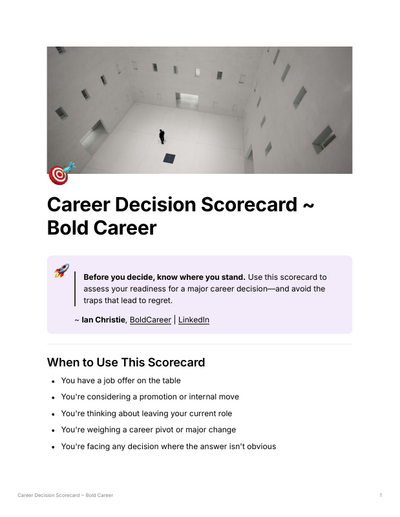
Bold-Career-Project_Worksheet_Career-Decision-thumb
Worksheet | How to Make a Career Decision
1
Interview - Mindset
Mindset & Approach
44Wh9Gu7T6uPjqxaE78h_M1_Intro_a.m4v 1:55
Welcome to the Course!
Welcome! I am delighted that you've taken this step to improve your career management skills around interviewing. This program is designed to help you deepen your awareness and understanding of interview processes, how to master the key steps in interviewing and most importantly, how to take ownership over your strategy and your candidacy. The benefits of the concepts covered in this program extend to your resume and LinkedIn profile development, your cover letters and to your overall career direction and development. Orientation The course is designed to be followed from Module 1 through to Module 9. Here's a break-down of the course sections: Modules 1 & 2 provide important background information on the job interview and the key success factors that set you up as a strong candidate in the job market. Then, we look at developing a strong mental game and a strategic approach to being a candidate.  Module 3 helps you become a more informed and strategic candidate by providing insights on the hiring process including interview formats and the typical recruitment process. We also analyze what’s important to your buyer (the hiring manager / recruiter).  In Module 4, you discover why truly understanding your professional background sets you up for success and you will dig-into inventorying your professional background.  Module 5 provides training on the various types of interview questions you might encounter. We deep-dive on behavioural questions as they form such an important part of modern interviews and empower you to be a more credible and confident candidate no matter the interview format.  Your ability to define why you should be hired for a target role is an essential skill. In Module 6, we put together the previous work to define your “why you.” This is a key strategy that is relevant not only for interviews, but also your resume and cover letter development and your overall career development.  Modules 7, 8 & 9 finish with training on how you can engineer a great impression throughout the interview process and how to navigate sticky situations and avoid the predictable mistakes. Finally, we finish up with a discussion about you, the candidate, in a 2-way hiring process and how to manage your candidacy.   Your Situation A final note on the course, and particularly Modules 4, 5, & 6. Some clients will come into this process having a decent framework and background information to build from. Others, might have worked for 10+ years without having to interview at all and will need to put more effort into mining their professional background and understanding their offering. Use your discretion as to how much work to put into the Interview Strategy Workbook. Scenario1: If you don’t have a pending interview in the next week or two, go through the program in the order it has been presented. Scenario 2: If you have an interview in the next week and can devote the next couple of days to investing in this process, then you can go through the modules in sequence as intended, but quickly. Depending on your experience levels with interviewing and hiring processes, you can skip or scan the sections that are familiar to you. Put special attention on module 4, as well as the predicted types of questions in module 5 (develop your answers and professional stories in the behavioural interviewing lessons) and then focus on your “why you” in module 6.  Scenario 3: If you find yourself in an emergency situation (interview in next couple of days), devote as much time as you can to preparing. Depending on your experience levels with interviewing and hiring processes, you can skip or scan the sections that are familiar to you. Use what you know about the job (job description, organization information, etc.) to connect the dots with your background. What are they looking for (experience, key competencies, etc.)? How can you speak to their needs?  Ready to get started? 
Orientation & Instructions
Welcome! I am delighted that you've taken this step to improve your career management skills around interviewing. This program is designed to help you deepen your awareness and understanding of interview processes, how to master the key steps in interviewing and most importantly, how to take ownership over your strategy and your candidacy. The benefits of the concepts covered in this program extend to your resume and LinkedIn profile development, your cover letters and to your overall career direction and development. Orientation The course is designed to be followed from Module 1 through to Module 10. Here's a break-down of the course sections: Modules 1 & 2 provide important background information on the job interview and the key success factors that set you up as a strong candidate in the job market. Then, we look at developing a strong mental game and a strategic approach to being a candidate.  Module 3 helps you become a more informed and strategic candidate by providing insights on the hiring process including interview formats and the typical recruitment process. We also analyze what’s important to your buyer (the hiring manager / recruiter).  In Module 4, you discover why truly understanding your professional background sets you up for success and you will dig-into inventorying your professional background.  Modules 5 and 6 provide training on the various types of interview questions you might encounter. We deep-dive on behavioural questions as they form such an important part of modern interviews and empower you to be a more credible and confident candidate no matter the interview format.  Your ability to define why you should be hired for a target role is an essential skill. In Module 7, we put together the previous work to define your “why you.” This is a key strategy that is relevant not only for interviews, but also your resume and cover letter development and your overall career development.  Modules 8, 9 & 10 finish with training on how you can engineer a great impression throughout the interview process and how to navigate sticky situations and avoid the predictable mistakes. Finally, we finish up with a discussion about you, the candidate, in a 2-way hiring process and how to manage your candidacy. Scenario1: If you don’t have a pending interview in the next week or two, go through the program in the order it has been presented. Scenario 2: If you have an interview in the next week and can devote the next couple of days to investing in this process, then you can go through the modules in sequence as intended, but quickly. Depending on your experience levels with interviewing and hiring processes, you can skip or scan the sections that are familiar to you. Put special attention on module 4, as well as the predicted types of questions in modules 5 & 6 (develop your answers and professional stories in the behavioural interviewing lessons) and then focus on your “why you” in module 7.  Scenario 3: If you find yourself in an emergency situation (interview in next couple of days), devote as much time as you can to preparing. Depending on your experience levels with interviewing and hiring processes, you can skip or scan the sections that are familiar to you. Use what you know about the job (job description, organization information, etc.) to connect the dots with your background. What are they looking for (experience, key competencies, etc.)? How can you speak to their needs?  Your Situation A final note on the course, and particularly Modules 4, 5, 6 & 7. Some clients will come into this process having a decent framework and background information to build from. Others, might have worked for 10+ years without having to interview at all and will need to put more effort into mining their professional background and understanding their offering. Use your discretion as to how much work to put into the Interview Strategy Workbook.   Ready to get started? 
iYymXNjISM6kjlilEWVM_M1_Intro_b_why_interview.m4v 1:31
Why Interview (...a Trick Question)
I know. It sounds like an obvious question. However, there’s an important twist contained in this lesson. Find out here.
q9qiFzyDTmC8HNTksO1G_M1_Intro_c_success_factors.m4v 3:05
Your Interview Success Factors
There’s a lot to absorb and master when it comes to interviewing. In this lesson, I offer 4 key success factors or themes that will help you be more intentional about your interviewing performance. 
5LmGiLITViCp2MWyNo5g_M2_a_Mental_Game-hd(1) 7:28
Have a Strong Mental Game
Interviewing can be stressful. Particularly when you don’t know the people conducting the interview. Or you do know them, and don’t feel worthy. In this lesson, we deal with the mental game of your interview performance. 
eChNh0nWTFGZcPVuEgnp_M2_b_Market_Power-hd(1) 1:39
Influence Your Market Power
One of the things lost in so much advice out there is the reality check of fit and value. Are you a strong candidate? Would you hire you for this role? The degree to which you have market power with a given job opportunity has a great bearing on your mental game and on your approach, and frankly, on your success rate. Learn more here. 
IRPbHkw0Q9OqPbTGivOL_M2_c_Success_Strategies-hd(1) 16:12
9 Winning Strategies to Adopt
In this lesson, I share with you 9 strategies that if embraced, will dramatically impact the success of your transition efforts.
Get a Strong Mental Game & Strategic Approach
Interview Strategy Workbook Step 1
Here I introduce you to the Interview Strategy Workbook, an essential resource to dig in to your jobs analysis, and other steps in subsequent modules.  Step 1 in the Workbook: Define Your Target The previous lesson described how one of the key success strategies is to align your energies towards a defined target. In the first workbook exercise, you will define what that is.  Action Steps Download the Interview Strategy Workbook Save it to a folder for your career development.  Open the file and complete Step 1: What’s my Next Move. Remember, if you can’t see it, you can’t hit the target. If you don’t have a specific job target, make some assumptions about the ingredients in a role that you would want to pursue. What would be aspirational? What would you apply to if you were ready? Describe it.  Tip: Go find 1-3 job descriptions / job ads that approximate your target job. Read them and highlight / make note of what they are looking for and the work. Use these as a guide. 
2
Interview - Hiring Process
Stop! Do you Understand the Hiring Process?
QGHRJ3KzQMu2c8vhMlff_M3_a_Intro.m4v 0:44
Introduction
A key part of mastering your interviewing performance is understanding the ins and outs of typical hiring processes. 
kC0vTcy7RVy7HIify3lA_M3_b_Phases_of_Interview.m4v 2:53
Phases of the Interview
Of course, there’s all kinds of jobs, job levels and interview types. In this lesson, we briefly deconstruct the phases of a “standard” interview. 
6AN0PifcTmQqz0ZurBF7_M3_c_Interview_Formats.m4v 9:48
Common Interview Formats
Not all interviews involve you and one other person across the table. Interviews can come in different formats. Learn about them here. 
1
8PyCCSLgQyuoUC9bzOLK_M3_d_Hiring_Process.m4v 10:14
Understanding the Hiring Process
Will they make me an offer? What happens next? Why are they calling me in for a 2nd or 3rd interview? In this lesson, I share with you the “typical” recruitment and selection processes to give you an insider’s view of their processes and timing. It will help be more informed. 
Get in the Head of Your Buyer(1) 13:43
Get in the Head of Your Buyer
This is an important lesson. Using a “mindmapping” technique, I walk you through the various considerations that might be present in the mind of the hiring decision maker(s). Commit to understanding this lesson and you’ll be a long way towards becoming a formidable candidate. This lesson impacts not only your interviewing performance but also your cover letters and resume. 
Manage Your Impression
Introduction 2(1) 0:40
Introduction
Once you’ve received an interview invitation, the real game begins. You are a candidate and one of your big concerns is managing the impression you make.
7K8OaeD4QUi1DEdGgB3q_M7_b_Attire.m4v 4:06
Get the Attire Right
If your interview format involves the interviewer meeting you (or being able to see you via video), your attire and grooming matter. (I’d argue that even if its a phone interview, you should dress the part.) Learn the ins and outs here.   
Pp9DnwnVQwWEegpQoQAc_M7_c_Behaviours_to_Avoid.m4v 4:25
Avoid these 7 Behaviours
It doesn’t matter how strong your resume is. If you exhibit one or more of these 7 behaviours, you can torpedo your candidacy. Find out what they are here. 
awskG0wSTZaANSkYT8HS_M7_d_Win_the_Lobby.m4v 10:51
How to Win the Lobby
There’s no doubt about it. Your interview performance is heavily influenced by your mental and physical state the moment the interviewer greets you. And a big part of that state is totally controllable by you. How well you slept, how you feel about your attire, whether you arrived calmly and early or stressed and almost late and how you managed yourself in the lobby. This lesson is about getting your game face on. 
uPnKMsmdQseu555AKJwY_M7_e_How_to_talk_about_a_company.m4v 4:06
How to Talk about a Company
There are some questions that don’t sound like actual interview questions, but actually are. Questions like Tell me about company X or your department or industry are requests for more information, but they are both a trap and opportunity. Turn this type of predictable question into a win.  Once you've watched the lesson video, do this activity:
qAFIFKafQn2i8zW5NmuQ_M7_f_Ask_Great_Questions.m4v 4:05
Ask Great Questions
One of the greatest confusion points for candidates is what to ask when given the opportunity. While you don’t always have time or receptive interviewers, this can be a moment in the interview when you can shine. Learn how here.  After watching the video, do this activity: 
YWrsRa8iTBenpT01kCJw_M7_g_Homework_on_Who_is_Interviewing.m4v 2:59
Research who will Interview You
For business meetings, a basic standard of professionalism is to do a bit of homework, where possible, on the person who is going to meet with you. Adopt this practice to make a stronger impression and improve your candidacy.
Va8uZrq4Tny5drB6WLoJ_M7_h_Phone_Manners.m4v 3:45
Phone Manners
There’s a strong chance that you’ll have to take a phone call as part of being a candidate. It might be a scheduled or unscheduled phone interview, a scheduling call or an offer call. Learn the in’s and out’s here. 
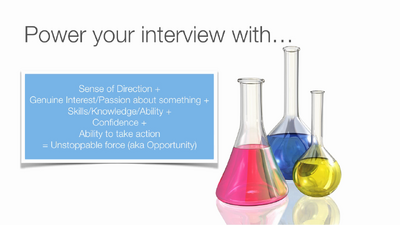
4hEhsfu4TKCcRFLp9puV_M7_i_Power_Interview.m4v 2:41
The Secret to Powering Your Interview Performance
Lost in all of the tactics is some foundational ingredients: Being an interesting, motivated and impressive individual. Someone with direction. Find out how to power up your interview. 
Improve Your Written Communications
There’s more to the interviewing and hiring process than the actual interviews.  Similar to the risks and opportunities associated with phone communications, a key part of managing your impression through the process revolves around your written communications. Your written communications should be a key component of your professional image. At a minimum, you don’t want this communication channel to damage the impression you otherwise made. And if done right, it can add to the strength of your candidacy.  Types of Written Messages Whether you are exchanging emails or messages, the most likely types of messages you will send are:  Introduction / Expression of Interest Scheduling Follow-ups Offer management Acceptance / declines Each is an opportunity enhance or damage your reputation with the hiring organization.   Traps to Avoid in Your Written Communications Sloppiness: The most obvious trap is making careless errors in your writing. Ttake the same level of care in crafting your messages as you would in your resume. There’s no room for spelling mistakes, typos or major grammatical errors. And replying to an email from your smart phone is not an excuse.  Message Format: Related to above, pay attention to the structure of your message. While emails generally aren’t long, how they appear on the reader’s computer makes an impact.  Salutation: Greet/acknowledge the person by name Use paragraph breaks Close: Sign-off with a thank you or sincerely or whatever is appropriate for the content of the message.  Email signature: It’s a chance to brand yourself, to establish consistency and to conveniently show your contact information Informal Tone: Similarly, avoid the use of a too informal tone. This is a business communication.  Inappropriate Expectations: It’s natural to put expectations into our applications and interview performance. It’s natural to want to know our status. However, the wrong timing and tone can be a real turn-off to the recruiter / hiring manager.  Timing: Hiring processes take time and in most cases, you aren’t the only candidate. The hiring manager has other priorities. Emailing 2 days after you applied to check status is not a good idea. Emailing the day after your interview to check status is also not a good idea. You can follow-up, particularly when you have other opportunities and need to get a sense. If they didn’t tell you how long it take, you might follow-up after a week to politely check status and reiterate your interest. If they did promise you a date, and that date passes, again you could follow-up a day or two after their promised deadline to check. That’s where tone comes in.  Tone: Avoid language that puts the monkey on their back, suggests they are at fault or asks for inappropriate information. I’m following up because you didn’t get back to me like you promised ...will not win you any points. Whether you are right or not is irrelevant. It’s their process. One way to do a follow-up is to acknowledge that you appreciate they have a process to go through and wanted to respectfully get an update on the where they are in the process.   Recipients: There may be more than one person involved in the hiring process. You can send a thank you to the various people who interviewed you. What you don’t do is an end-run on their process. Establish who is your main point-of-contact and communicate with them. The other danger around recipients is to forget to include someone in a communication who should have been included. Again, when in doubt, ask who you should communicate with. Often, they may hand you off from a recruiter to a hiring manager to HR to make an offer as the process progresses. Each person in the process has a role. Respect that.  Room for Misunderstanding: Finally, the written word can be tricky. Particularly in email. If not careful, you can easily convey the wrong meaning in your written messages. If your messages are short and to the point, you may come across as curt and lacking finesse. If you don’t actually write it, they may not get a sense of your level of interest.  Finally, assess when a phone call might be a better tool than an email.  Assess Your Strengths If written communication and protocols are a strong point, then you should be fine. Just keep these pointers in mind.  If on the other hand, this is new territory for you, or written communications aren’t your strength, or something you just don’t pay a lot of attention to, then you will need to take extra care. Here are a couple of pointers:  Write your message. Save it. And come back to is with fresh eyes. Make the appropriate edits.  Have someone else look at your message. Did they receive the information and meaning that you intended? Adjust accordingly. 
Situations & Mistakes
02Cu8inHSMCKPodqfI7z_M8_a_Intro.m4v 0:20
Introduction
We’ve been working on the assumption that everything goes well. Of course, in real life, situations come up that throw you off your game. Or, you make an avoidable mistake and it sidetracks the meeting.  Let’s see what we can do to prepare for some of the predictable situations and avoid those key mistakes. 
OBIJ034Qb64AhB0gDsa8_M8_b_Situations_fixed.m4v 8:36
Situations - What to do when...
To be fully prepared, you need to think about what could go wrong, or what could happen that would be unexpected. Forewarned is forearmed. This lesson outlines some of the key “surprise” situations that you might experience in interviews, or interview processes. 
BItKu7yBRWycpBjct3Iy_M8_c_Top_Mistakes.m4v 6:23
Avoid these Common Interview Mistakes
There are a series of avoidable, but all-to-common interviewing mistakes. Let’s commit to not allowing these to happen. Find out how here. 
You as Candidate. A Two-Way Street
1R8Gh2LLQRNexi6JsA0A_M9_Presentation.m4v 11:04
Understanding Your Position as a Candidate
In this final module, we discuss your journey as a candidate in the hiring process. If you’ve set it up correctly, it should be a 2-way street. Between you and the organization looking to hire talent. This lesson will help you get a handle on how to progress as a candidate and give you thoughts about walking away from situations that aren’t a fit. Which is at least as important as receiving an offer.
Interview - Other Questions
Master the Different Question Types
tLHcictSWGYu4q3Knr3Q_M5_a_Introduction_to_Mastering_Question_Types.m4v 6:52
Introduction to Interview Question Types
In this module, we go deep into training you on how to handle the major types of interview questions and I give you a briefing on each of the other types of questions.  In this first lesson, I introduce the key success principles to help you master your interview question responses.
Interview Questions Response Workbook
To help with your preparation, I've put together an in-depth resource containing:  Common traditional interview questions, including a description & coaching on what the interviewer is looking for Additional traditional questions for you to work on Common behavioural interview questions, including a description & coaching on what the interviewer is looking for Additional behavioural questions for you to work on
1
Gz7njlNzQGCmnhjpYQ83_M5_b_Traditional_Questions.m4v 8:43
Get a Lock on the Core Interview Questions
Tell me about yourself. What are your weaknesses? These are examples of traditional interview questions. Learn more about how to handle them here.   
Other Question Types
kkq0Px7gTwa7Be1QDrr5_M5_d_Situational_Questions.m4v 4:21
Situational Questions
Another difficult type of question to handle are the situational or hypothetical questions. What would you do if your manager was unavailable and ….” Good news, there’s an answer framework you can use. 
dOA0MYMQoMc5VIWXtuaQ_M5_e_Technical_Questions.m4v 2:13
Technical Questions
Every job has some type of technical component. This lesson provides some basic guidance on what to do.
2iExB9sRRda3hx77f7Za_M5_f_Bizarre_and_Interest_Questions.m4v 5:22
Bizarre & Interest Questions
You may face what I call “bizarre” or personal-interest type questions. Why are they being asked? What should you answer? Find out in the video. 
FrZLK61wRsaLJyzcPtTB_M5_g_Puzzle_and_Case_Questions.m4v 5:58
Puzzle & Case Questions
Apr 23, 2026
These are questions and interview formats designed to test your analytical abilities, your thought processes and how you defend your responses. This lesson provides basic guidance as there are many books that delve specifically into this deep and somewhat technical topic. 
In-Interview Presentations
A common practice in interviewing for senior roles is to require candidates to make a presentation, with the hiring organization issuing instructions on time limit and subject. While this may seem like a daunting experience, it can actually be good for your candidacy, if you prepare. Presenting puts you in the driver’s seat and allows you to demonstrate sides of you that may not be as evident in a traditional interview situation. The presentation may also precede a business discussion on some of the key issues raised during the presentation. Unlike many interview situations where you don’t know what the format will be, here, you have the advantage of being able to prepare. Here are some tips to make the most of the opportunity: Answer the Question: In most cases, you will be given a specific question to answer or challenge to address and a 10-15 minute time frame in which to do it. My most important advice is to answer the question. It sounds obvious, but you would be surprised at how many slides and minutes most people put into introductions, background information and other relevant, but not critical content. Do not skimp on recommendations and how you intend to solve the problem, or pursue the opportunity. Challenge Yourself: Now that you have a draft, where are you most likely to be challenged? Presentations often require you to make a recommendation on a course of action. A common pitfall is the “how” part. How will your recommendation be implemented? How much will it cost? By when? What does the organization get out of your recommendation? Supplemental Material: Do not go over on time and do stick to the subject they have asked you to address. However, unless specifically forbidden to do so, you might want to add a hand-out or two to supplement your presentation. Process-flow charts, a summary spreadsheet, or a drill-down on a specific topic may help push you over the top. Visual: You can significantly elevate your message with a visual representation of information rather than the same old bulleted slides. Timelines, data breakdowns, or segmentation ideas are often best handled visually, rather than in text. Defend, but don’t Argue: You may get asked some difficult follow-up questions. They may be legitimate clarifying questions about content, or an attempt to see how you handle yourself. You should attempt to defend your recommendations, ideally with objective measures. However, sometimes you will find yourself with the wrong recommendation, the wrong answer, or not in agreement with the people conducting the interview. You have to read the situation and decide when to back off. Do not try to win an argument in an interview. Instead, find a way for both sides to win. “You make an excellent point. My recommendation is an example of an approach we could take. However, we would need to get some hard data first before making a final conclusion.” On Stage: It goes without saying that you are on stage and need to conduct yourself accordingly. Know your presentation and timing. Make eye contact with your audience. Pause between important points. Use presentation slides to support your text, rather than read from the slides. Do your best to speak without cue cards. Find out ahead of time what the audio-visual situation is going to be. Be comfortable enough with your subject so that you can seamlessly handle interruptions, or required changes in direction based on audience feedback. In other words, it really isn’t that different from any professional presentation. Know your content. Back-up your recommendations. And, be prepared.
Interview - Behavioural Questions
Master Behavioural Questions
pYYNoceReRFhl3q5cooQ_M5_c_Behavioural_Questions_part_1.m4v 12:29
Intro & Behavioural Question Theory, pt 1
These are the questions that begin with something like: Give me a specific example...that illustrates your critical thinking abilities Tell me about a time when... I've devoted a separate module to the behavioural question because:  It is complex Doing well requires more work on your part It connects with the importance of mining your background as your responses to these questions involve you telling true stories And it hits on the strategy part of your career move interview strategy You will find 3 lessons on behavioural questions and answers.  In parts 1 & 2, I teach you the theory and how to tackle these questions. Part 3 is a workshop where I ask you to pause the video and develop and fine-tune a practice answer. This is very valuable material and an opportunity for you to level up on your skills in this area. 
DfERKw2Toa8nwPo9r6je_M5_c_Behavioural_Questions_part_2.m4v 10:56
Behavioural Question Theory, pt 2
In part two of this behavioral question section, what I'd like to do is run you through in detail a model or framework for answering one of these questions. And what I'm gonna do is use the CAR fra...
XFPCUHZOREWiWikjYJWm_M5_c_Behavioural_Questions_part_3.m4v 25:11
Behavioural Question Workshop
So in this section, we're gonna workshop the development of a response to the CAR formula. It's really important to practice a story framework that works. And so as described before, we will use th...
Interviewing Sprint
CAD 2,500
Buy now
jeU3G3gh41YJUkZ6GFHDFUdi
Mario Gonzales
Dec 10, 2025


Working with Ian Christie was one of the best investments I’ve made in my career. His expertise in executive storytelling, strategic interview preparation, and leadership development directly contributed to landing the best role of my professional life.

Nicole Trigg
Dec 5, 2025

After more than a decade of organic career advancement, I decided to re-enter the job market and quickly realized I needed clarity on which direction to take, strategy to get me to my next professional destination, and guidance to support me along the way.

By putting in the work and following Ian’s system, I went from a place of uncertainty to interviewing confidently within a matter of months.

Four months into my new position and I couldn’t be happier. I would not be where I am today without the support of the Bold Career Project. I highly recommend Ian and his team to anyone feeling stagnant in their career and looking to make a meaningful transition.

Nicole Trigg

Senior Communications & PR Leader

D3le2HgBBDUJGGmtmzajgSwI
Brandon Pettersen
Sales Manager, Business Development
Oct 17, 2024

I can't say enough positive things about Bold Career Project. Facing a transition into the demanding executive world, I felt overwhelmed and outdated. Their team was incredibly knowledgeable, providing expert guidance tailored to my needs. From revamping my resume and LinkedIn profile to honing my interview skills, they gave me the tools and confidence to land my dream executive role. Their professionalism, support, and genuine care for my success made all the difference. If you're looking to elevate your career, look no further!

Price CAD 2,500
Buy now
Bold-Career-Logo-200px
HOME
NEWSLETTER
PRODUCTS & SERVICES
ABOUT
ARTICLES
CONTACT
TERMS
Copyright © 2026 Bold Career Project
Amex Diners Discover JCB Mastercard Visa
AmexAmex DinersDiners DiscoverDiscover JCBJCB MastercardMastercard VisaVisa
powered by